Magh Mela
A month of pilgrimage on the Sangam sands
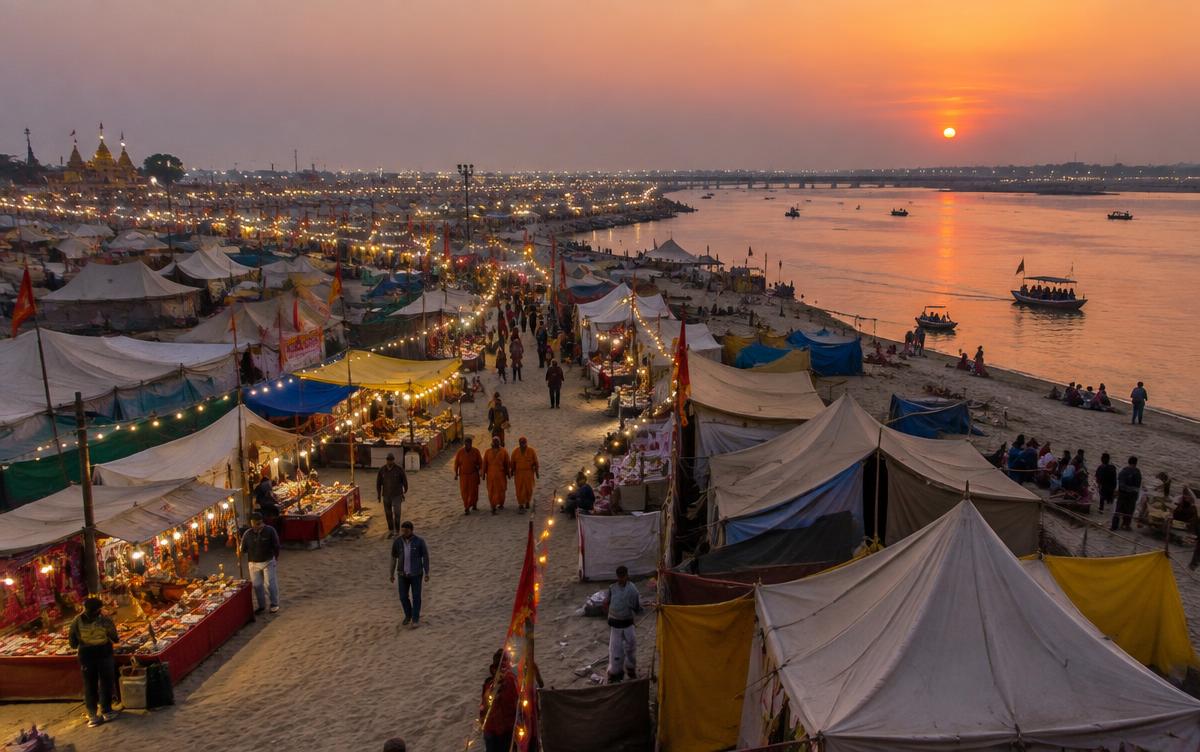
Every year in the month of Magh a temporary city rises on the riverbanks at Prayagraj. Pilgrims bathe at the confluence, kalpvasis live in camps for the full month, and akharas, ashrams and religious organisations set up their own quarters.
Dates · Needs official confirmation
We do not publish unverified Mela dates
Bathing dates move every year with the Hindu calendar, and the Mela administration issues the official schedule along with route, parking and camp arrangements. This page lists the bathing days by name; the calendar below is ready for exact dates to be filled in once they are published.
What is Magh Mela?
Magh Mela is the annual religious fair held at the Triveni Sangam through the month of Magh. It follows the same geography and much of the same organisation as the Kumbh Mela, on a smaller scale, and draws pilgrims from across India for daily bathing, discourses and ritual.
History
Bathing at Prayag in the month of Magh is an old practice referred to in Hindu religious texts. In its modern form the Mela is organised by the district and Mela administration, with a temporary township laid out each year on the floodplain as the rivers recede.
Kalpvas
Kalpvasis take a vow to live on the sands for the full month. The routine is austere: bathing at the confluence each day, a single simple meal, prayer, discourse and community service. Their camps, marked by flags and thatch enclosures, form the backbone of the Mela's settled population.
Akharas & camps
Akharas — monastic orders of ascetics — along with ashrams and religious trusts occupy allotted sectors. Processions of saints on major bathing days are among the most striking sights of the Mela.
Mela calendar
Main bathing days
- dateSnan
Paush Purnima
Marks the start of the Mela and of Kalpvas.
- dateSnan
Makar Sankranti
One of the major bathing days of the Mela.
- dateSnan
Mauni Amavasya
Traditionally the largest gathering of Magh Mela.
- dateSnan
Basant Panchami
A major snan associated with the akharas.
- dateSnan
Maghi Purnima
An important bath towards the close of the month.
- dateSnan
Mahashivratri
Traditionally the concluding bath of the Mela.
Accommodation
Tented camps in the Mela area, dharamshalas, ashram accommodation and city hotels. Mela-area camps are allotted each season by the administration; availability and rates are not fixed in advance.
Transport
Special trains and buses usually run during the Mela, with designated parking areas and shuttle arrangements. Routes are announced each year and can change on major bathing days.
Food
Bhandaras run by religious organisations, food stalls across the Mela area, and city eateries. Prefer freshly cooked food and sealed drinking water.
Medical
Temporary hospitals and first-aid posts are set up in the Mela area, with ambulances on standby and referral to city hospitals such as SRN and Beli.
Police & security
Temporary police stations, watchtowers, river police and boat patrols operate through the Mela. Follow announced crowd-flow directions on bathing days.
Lost & found
Lost-and-found centres and public announcement systems operate in the Mela area, including dedicated help for children and elderly pilgrims separated from their group.
Visitor guidelines
- Note your sector and camp number as soon as you arrive.
- Keep a written note of a contact number on children and elderly relatives.
- Travel light, and avoid carrying jewellery into the bathing area.
- Use only designated bathing platforms and marked routes.
- Do not follow shortcuts across the sand after dark.
- For emergencies call 112 or reach the nearest Mela police post.
Frequently asked questions
- When does Magh Mela take place?
- It is held annually in the Hindu month of Magh, which usually falls between January and February. The exact dates follow the Hindu calendar and are announced each year by the Mela administration.
- What is Kalpvas?
- Kalpvas is a month-long austerity in which pilgrims, called kalpvasis, live in camps on the Sangam sands, bathe daily, eat simply and spend the month in prayer and discourse.
- Do I need to book accommodation in advance?
- For the main bathing days it is strongly advisable. Mela-area camps are allotted seasonally and city hotels fill up early.
- Is it suitable for elderly visitors and children?
- Yes, but avoid the peak bathing days if possible, keep a written contact card on each person, and agree on a meeting point before entering the crowd.